
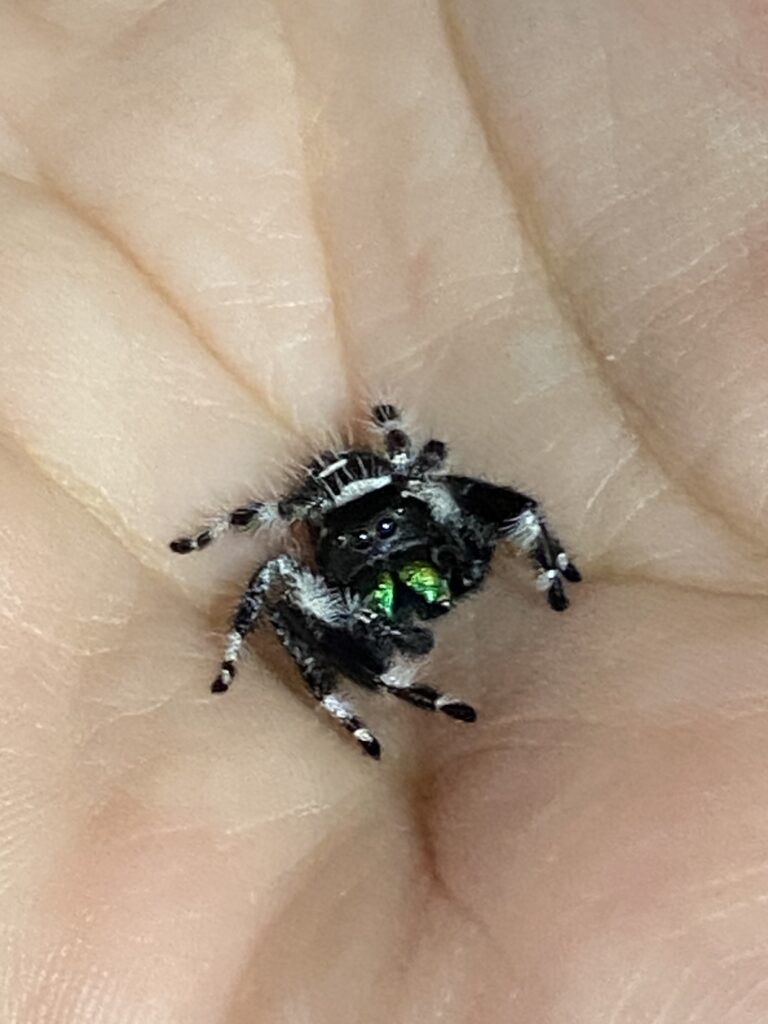
Why Jumping Spiders Make Fun Beginner Pets
Jumping spiders (Salticidae) are active, curious, and manageable for first-time owners. They don’t build trapdoors or large webs; they explore vertically and hunt visually, making them engaging yet undemanding pets.
They thrive in smaller vertical enclosures (~6×6×9 in or ~15×15×23 cm), making setup simpler than for large inverts. Now let’s look at what you need to make your jumper feel at home.
Must‑Have Accessories & Enclosures
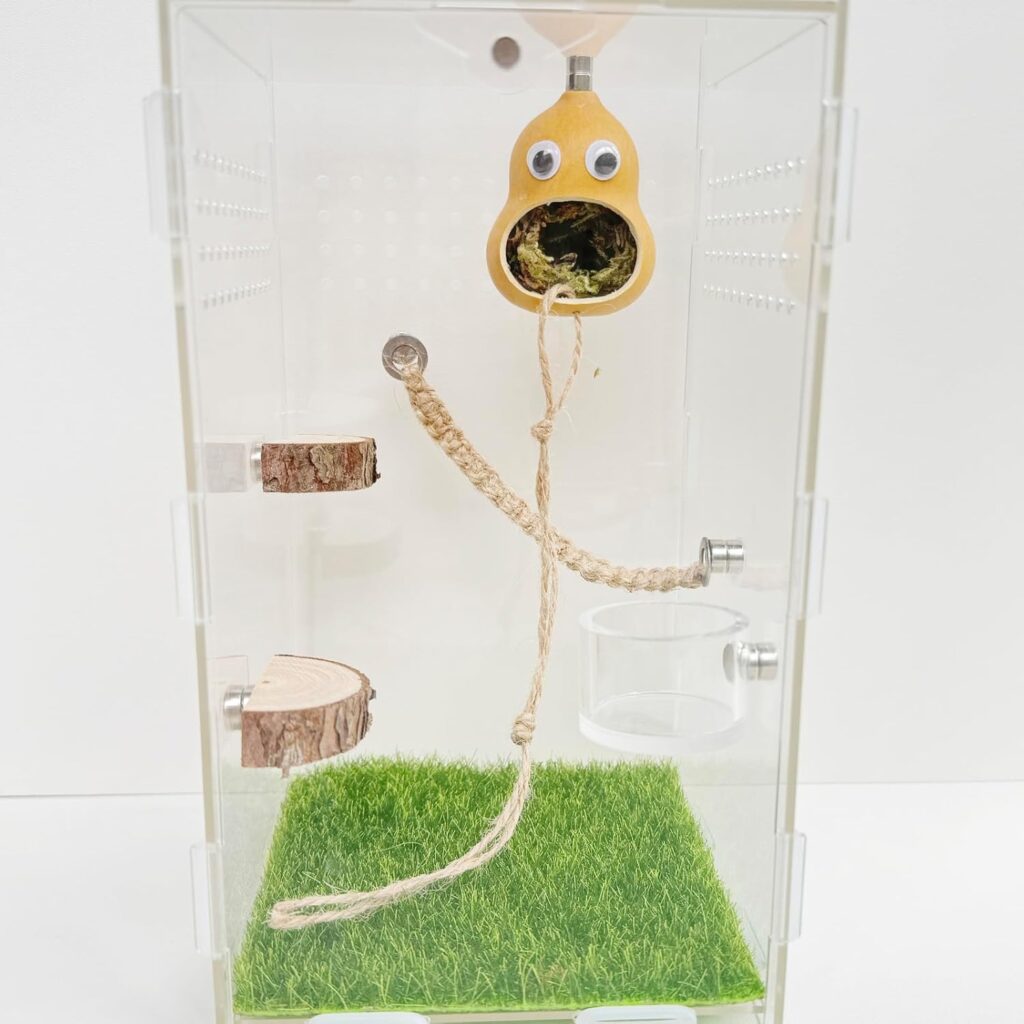
House Acrylic Enclosure
Crystal‑clear magnetic house for jumping spiders.
$28.99
A lovely 5.9″x3.5″x9.4″ in front‑opening acrylic chamber with fine ventilation holes. The front access prevents disturbing web structures during feeding or misting.
Canopy Acrylic Enclosure
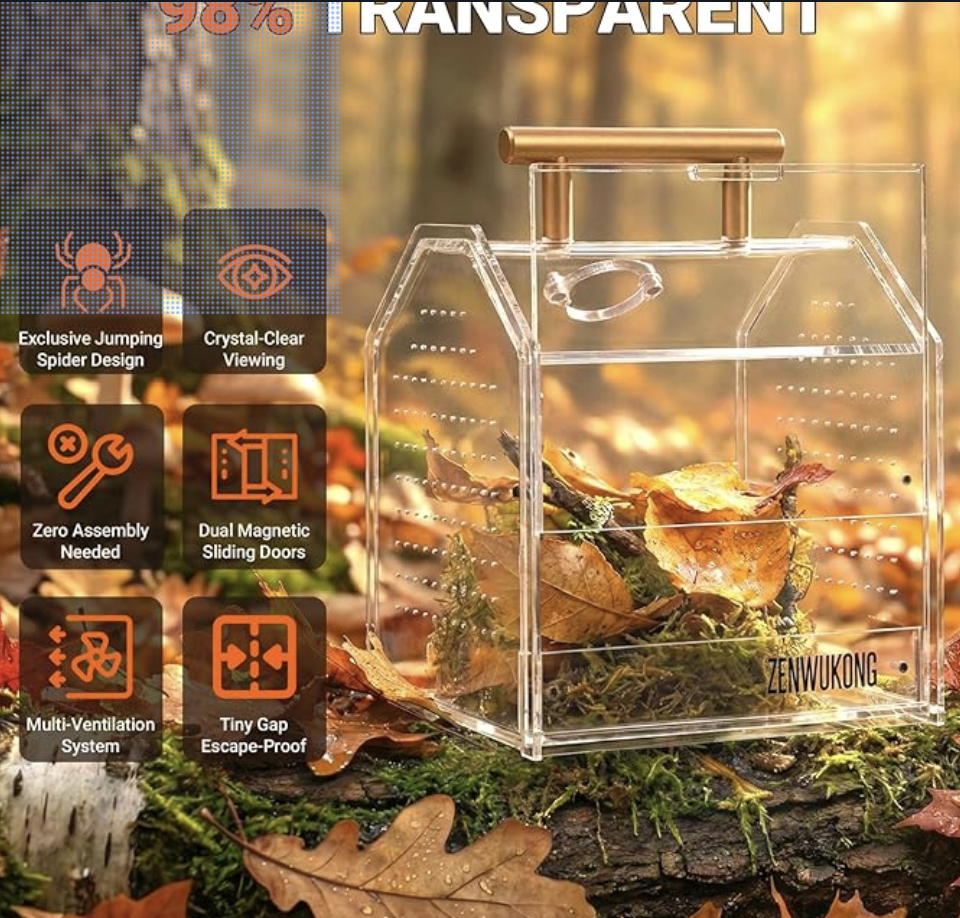
This classic roof‑style mini terrarium offers top space for climbing, excellent ventilation control, and clear viewing. Great for arboreal behavior.

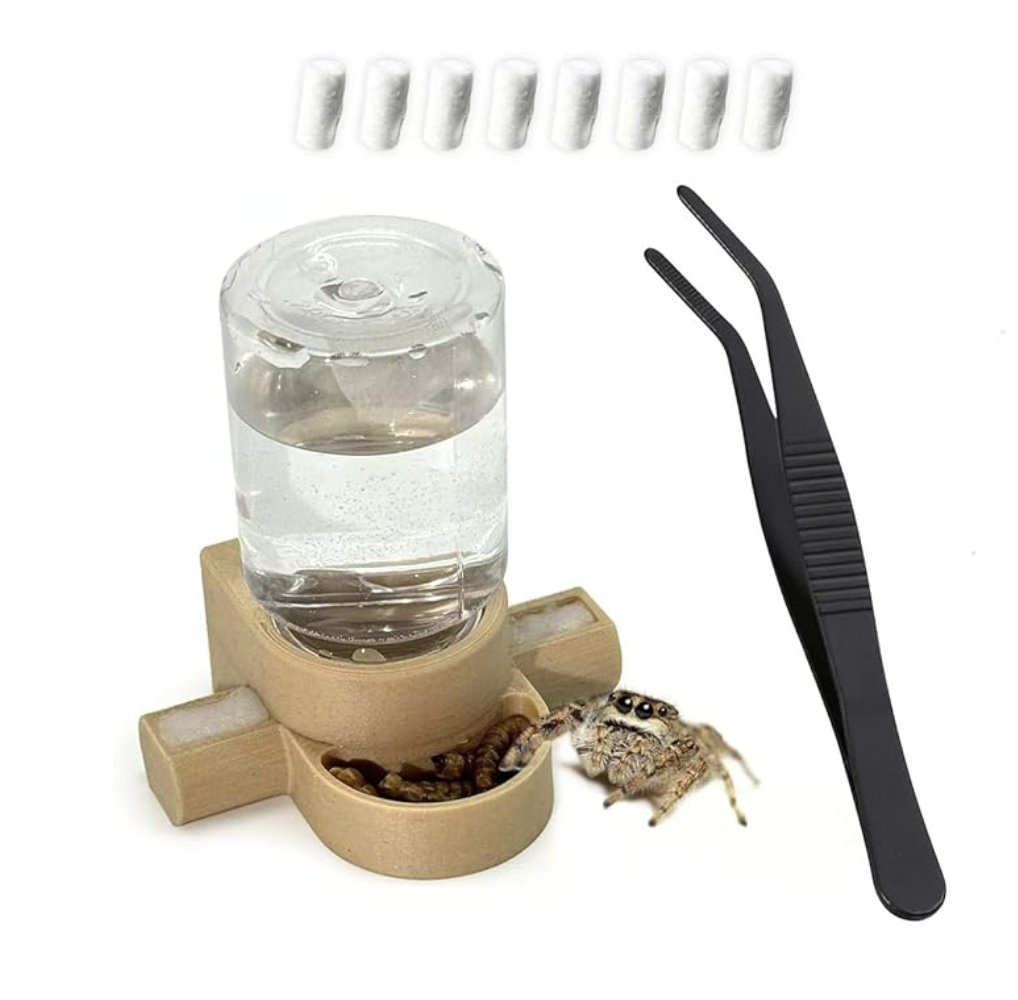
Magnetic Jumping Spider Water Dispenser
The waterer enables automatic water supply, which can keep the environment of the feeding box continuously moisturized. No need to add water frequently, simulating the natural drinking environment.
Jumping Spider Enclosure – Acrylic Terrarium Habitat
A slightly larger acrylic habitat (approx 3x3x6 inch) with a sliding front door, magnetic vents, and 360 view. Great if you want room for enrichment items.
Key Features to Look For
Enclosure Size & Access
- Aim for vertical height (~6 in or taller). Jumpers use the upper space the most.
- A front‑ or side‑opening door prevents damage to webs, important since they nest up top.
Ventilation & Humidity
- Use fine‑mesh or small ventilation holes (~1 mm) to prevent escape while allowing airflow.
- Jumpers usually flourish at normal room humidity (≥ 20 °C). Slight increased humidity during molts can be given via misting or a moist sponge, but avoid constant damp substrate or soaked items that can mold.
Climbing & Hiding Décor
- Add twigs, cork bark, fake or live plants, vines to build vertical and hiding spaces—essential for enrichment.
- Avoid organic yarn that can grow mold from spraying. Hemp yarn or clean natural wood is better.
Useful Care Accessories
- Feeder dish or magnetic ledges to contain prey like mealworms or dubia roaches (food for jumpers), while allowing clean feeding.
- Small water feeding cup or hydration pod (e.g., wick or cotton inside magnetic dish)—jumpers drink by licking surface droplets, so this is a useful accessory.
- Spray bottle & tweezers or soft brush—to mist water and feed safely without stressing your jumper. A care kit that includes these is great for beginners (like those included in many kits).
Setup Guide for Beginners
| Step | Action |
|---|---|
| 1. Choose enclosure | Start with a front‑opening acrylic mini or domus style for easy access and escape prevention. |
| 2. Add décor and hides | Place climbing branches, artificial or live plants, and a small walnut/cork hide near the top area. |
| 3. Set up humidity | Mist sides or plant sparingly; include a damp sponge near heating source if needed. |
| 4. Water access | Use a hydration dish or cotton wick—never leave a deep water bowl. |
| 5. Feeding tools | Use tweezers or soft brush to place prey; a removable feeder dish helps prevent escape. |
| 6. Monitor environment | Keep temperature at ~20–25 °C (68–77 °F); mist lightly every other day as required. |
| 7. Maintenance | Clean debris with minimal web disturbance. Replace substrate or décor if mold appears. |
Engaging with Reddit and Invertebrate enthusiasts, many keepers describe success with simple deli cups with drilled ventilation, provided they’re front-opening and paired with proper decor and care.
FAQs
1. What size should I choose first?
Start with a mini or cup enclosure (~2–3 in tall) for spiderlings. For juveniles or small adults, go for ~6×6×9 in size.
2. How often do I feed my jumper?
Juveniles eat every 3–4 days. Adults can be fed once or twice weekly. Remove uneaten prey after 1 hour.
3. How high should humidity be?
Typically 40–60%, but target ~75% only during molting. Good ventilation helps prevent mold.
4. Can I use live plants?
Yes, in a bio‑active setup—but ensure proper clean‑up, creatures like springtails, and be cautious of mold.
5. How do I prevent escape?
Use fine‑mesh lids or small drilled holes (≈1 mm). Avoid large mesh or gaps—jumpers are tiny and fast.
6. What should I avoid?
Avoid soaking yarn or decor with mold potential. Don’t use deep water dishes. Don’t disturb webs when cleaning.
Expert Tips & Behavior Insights
- Jumpers spend 90–95% of their time at the top of the enclosure, make that area engaging with climbing and hiding spaces.
- Substrate is optional; for cleaner maintenance, many keepers avoid it and use smooth gravel or leave bare. I prefer some to have some kind of soft landing in case of a fall, as it could be potentially deadly.
Summary
For beginners, start with a compact front‑opening acrylic enclosure. Add a naturalistic, larger Domus enclosure if you want room for plants and enrichment. Equip with basic tools, spray bottle, tweezers, water dish, feeding ledge, and ensure good ventilation with a clamp, then you’re ready to welcome a curious jumper into your Wandering Cloud of arachnid wonder.