

I have been buying vintage since I was around 10 or 11 years old.
Back then, I used to go vintage shopping with my mother, and those moments stayed with me. Vintage was never just about clothes for me. It was about memories, discovery, and beauty. Every piece felt as though it had already lived a life before reaching your hands.
Now that my mother is no longer here, I still keep buying vintage.
I would say that about the 98% of my wardrobe comes from second hand shops.
In a way, it makes me feel connected to her. It has become one of those small rituals that carry memory, comfort, and emotion without needing too many words.
And maybe that is also why I notice certain details so deeply. Once, here in Belgium, I found a 2 Czech koruna coin on the ground. It was such a small thing. However, it felt strangely meaningful to me. It was almost like one of those quiet signs life leaves in your path. Memory, places, and emotions somehow overlap. Now that coin lives perpetually in my wallet.
Over the years, I have bought vintage in different countries, but one comparison I find especially interesting is vintage shopping in Prague and the Czech Republic versus Italy. The differences are real, and they are not only about price. They also involve style, curation, condition, atmosphere, and even the emotional experience of shopping itself.
So if you love second hand and vintage fashion, or you are planning to shop in Prague, the Czech Republic, or Italy, here are the real differences I have noticed and the things I would pay attention to before buying.
Vintage shopping in Italy: character, variety, and emotion
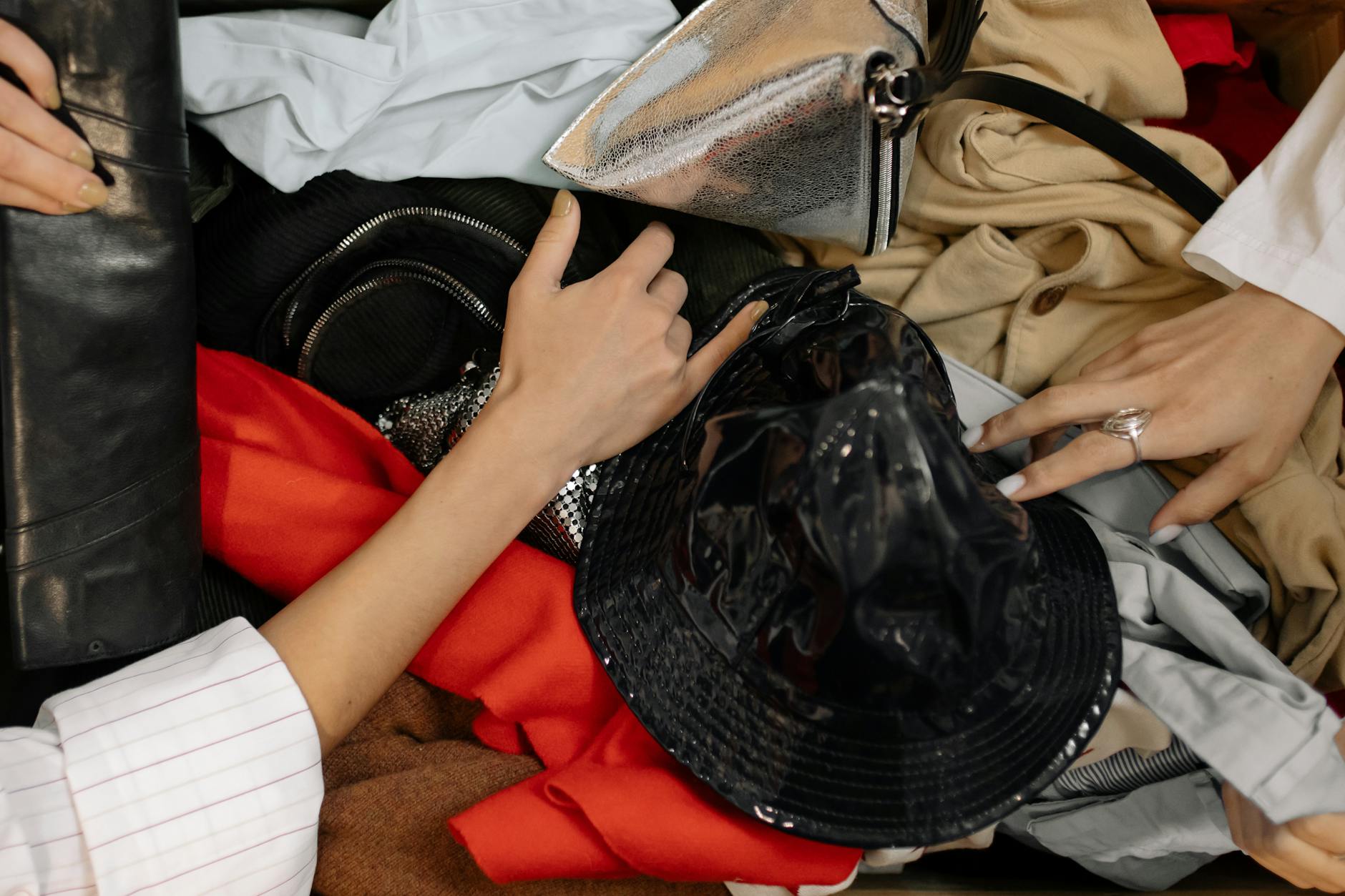
Italy has a very strong visual culture, and that often shows in vintage shopping too.
Vintage shopping in Italy can feel expressive, stylish, chaotic, charming, and highly personal. Depending on the city, you may find anything from tiny second hand shops with hidden gems. You may also discover more polished vintage boutiques with curated pieces, statement jackets, designer finds, leather bags, silk scarves, and unique accessories.
What I often notice in Italy is that vintage shopping feels deeply tied to identity and style. There is usually a strong sense of taste, presentation, and personal flair. Even when shops are small, they often have personality.
At the same time, prices can vary a lot. In some places, especially in larger or more fashionable cities, “vintage” can sometimes become a label that raises the price more than the actual value of the item. You are not only paying for the garment. You are sometimes also paying for the setting, the curation, and the aesthetic around it.
That does not mean vintage in Italy is not worth it. It absolutely can be. But it does mean you need to look carefully and not get carried away by atmosphere alone.
I have to admit that I prefer shopping in the Czech Republic when it comes to vintage. Items are kept in a better shape, are taken care of.
In Milan I had several sad experiences with stained items, foul-odored ones (sweat) or broken ones. And OVERPRICED.
Vintage shopping in Prague and the Czech Republic: practical, surprising, and sometimes underrated

Shopping vintage in Prague and in the Czech Republic can feel very different.
Compared to Italy, I often find the Czech vintage and second hand experience more practical and sometimes less theatrical, but also full of unexpected treasures. In some shops, the atmosphere may feel more understated, less romanticized, and more focused on the actual item rather than the performance of selling it.
That can be a very good thing.
There is often a sense that you may come across genuinely interesting pieces without everything being wrapped in a highly curated “Instagram vintage” image. In some cases, it can feel more raw, more direct, and more accessible.
Prague in particular can be very interesting because it mixes local second hand culture, vintage aesthetics, tourism, and creative influences. This means you can find both genuinely exciting pieces and places that are clearly more expensive because they are aimed at visitors or trend-driven shoppers.
So while the Czech Republic can sometimes offer better surprises and less inflated presentation, it still matters a lot where you shop and how carefully you look at the garment.
The biggest differences I noticed
1. The atmosphere is different
In Italy, vintage shopping often feels emotional, expressive, and image-driven. Even smaller shops may feel curated with a very clear aesthetic identity.
In Prague and in other parts of the Czech Republic, vintage shopping can sometimes feel more practical, quieter, or less styled for presentation. That does not make it worse. In some cases, it actually makes the experience feel more honest.
2. Prices can be inflated in different ways
In Italy, the inflation often comes from style, city culture, and the idea of “beautiful vintage.”
In Prague, price inflation may occur more in tourist-oriented areas. This can also happen in trend-focused areas. In these places, certain pieces are sold more for their cool factor than for their true value.
When I shop in Teplice, it’s just the slow-life experience that cures everything.
The little shops, the big one downtown at the train station (that my mom hated because “it’s colder in here than outside and outside it’s snowing!”), the cafes.
In both countries, I would say the same thing: do not assume that “vintage” automatically means fair pricing.
3. The idea of “vintage” is not always the same
This is one of the most important points.
Not everything sold as vintage is truly vintage. Sometimes it is just second hand. Sometimes it is relatively recent fast fashion being presented in a more appealing way.
That can happen in both Italy and the Czech Republic, so it is always worth checking labels, fabric quality, construction, and overall wear before buying.
4. Condition matters more than styling
A beautiful display can make an item seem more special than it really is.
This is true everywhere, but I think it becomes even more important when shopping in places with a strong visual identity. A great vintage shop can still sell pieces with damage, weak seams, old smells, hidden stains, broken zippers, or fabric fatigue.
Never buy only with your eyes. Buy with your eyes, your hands, and your attention.
What to watch out for before buying vintage
No matter whether you shop in Italy, Prague, or elsewhere in the Czech Republic, these are the things I think are worth checking carefully.
Check the fabric
Some fabrics age beautifully. Others do not.
Try to look at the material composition if there is still a label. Natural fibers can be wonderful, but they can also show wear differently. Some synthetic fabrics may still be in great shape, while others can feel cheap or tired.
Touch matters. The fabric should still feel wearable, not just visually interesting.
Check seams, closures, and structure
Look at:
- seams: single stitching many times is a sign of an original vintage piece.
- hems
- buttons
- zippers
- lining
- shoulder structure
- underarm areas
These are the places where age and wear often show first.
Smell the garment if possible
This may sound obvious, but it matters.
Some vintage pieces only need airing out or washing. Others carry very strong odors from storage, humidity, smoke, or old environments, and not everything comes out easily.
Be careful with “aesthetic markup”
Sometimes you are paying for the styling of the shop rather than the quality of the piece.
This is especially important in boutiques that are visually beautiful or highly curated. A gorgeous setting can make an average piece look exceptional.
Know the difference between vintage, second hand, and retro-inspired resale
This is something many people forget.
A piece can be second hand without being vintage. A piece can look vintage without actually being old. A shop can use vintage as a marketing label even when what it sells is mostly used fashion from more recent years.
That does not necessarily make the item bad, but it does change what a fair price should be.
Is buying vintage in Prague or the Czech Republic cheaper than in Italy?
Not always.
It can be, especially if you find more practical second hand spaces or less tourist-oriented areas. But I would not say the Czech Republic is automatically cheap and Italy is automatically expensive. It depends a lot on the shop, the neighborhood, the type of item, and how curated the store is.
What I would say is this:
- in Italy, you may pay more for image, curation, and style atmosphere
- in Prague, you may still find strong prices in trendier or tourist-oriented shops, but sometimes with a more understated shopping experience
So the best approach in both places is the same: stay curious, but stay critical.
Why vintage still matters to me
For me, vintage shopping has never only been about fashion.
It carries memory. It carries emotion. It carries continuity.
I started when I was a child, going with my mother. And now, even though she is no longer here, I still continue. In some quiet and personal way, it helps me feel close to her.
That may be one of the reasons I still love vintage so much. It is not only about finding beautiful objects. It is about finding connection: to places, to stories, to past versions of ourselves, and sometimes to the people we loved.
That is why I think vintage shopping can feel so different from ordinary shopping. It is not only transactional. It can also be emotional, cultural, and deeply personal.
Final thoughts
If I had to sum it up simply, I would say this:
vintage shopping in Italy often feels more expressive, aesthetic, and emotionally styled, while vintage shopping in Prague and the Czech Republic can feel more understated, practical, and unexpectedly rewarding.
Neither is automatically better. They are simply different.
The real secret is knowing what you are looking at, checking condition carefully, and not letting atmosphere make the decision for you.
And maybe, sometimes, vintage is also about something more than clothes. Sometimes it is about memory, identity, comfort, and the little invisible threads that connect us to places and people.
For me, that will always be part of it.
Let me know about your experiences and if you would add any other advice to my list!