
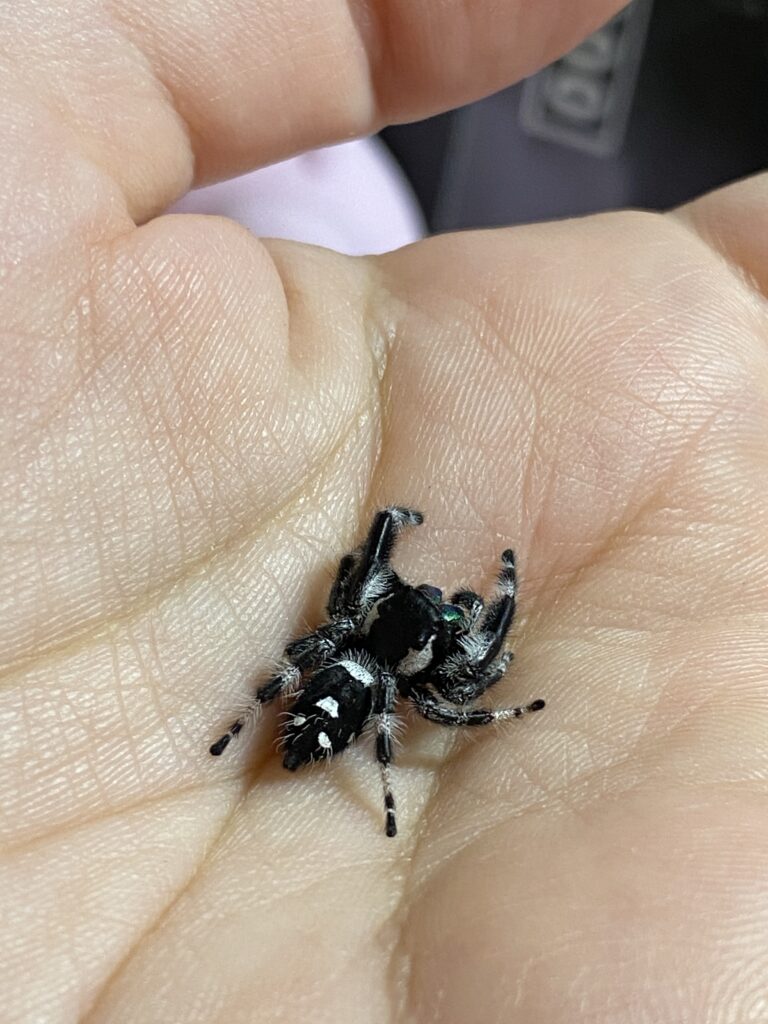
If you had told me a year ago that I’d be keeping jumping spiders as pets, I probably wouldn’t have believed you. Now, I can confidently say they’re some of the most fascinating, low-maintenance, and personality-filled pets I’ve ever owned.
In this post (and newsletter), I want to share what I’ve learned from caring for my own jumping spiders — Spike, Molly, and Taco — including species clarification, habitat setup, costs, and what actually matters day to day.
Whether you’re spider-curious or already hooked, this is my real-world experience with jumping spiders as pets.
Why Jumping Spiders Make Such Great Pets
Jumping spiders are nothing like the spooky stereotypes people imagine. They’re:
- Active during the day, at night they go to sleep in their hammocks.
- Visually curious and alert
- Quiet, clean, and odor-free
- Easy to care for in small spaces
They don’t build messy webs. They hunt visually, stalk prey, and leap with precision. Watching them interact with their environment is endlessly entertaining.
Meet My Spiders (Correct Taxonomy Included)
One thing I want to clear up early: species, morphs, and locales are often confused in the hobby. Here’s the accurate breakdown of my spiders, as some of you may have met them on my social media, such as Instagram or TikTok.
Spike — White Bahamas Phidippus regius
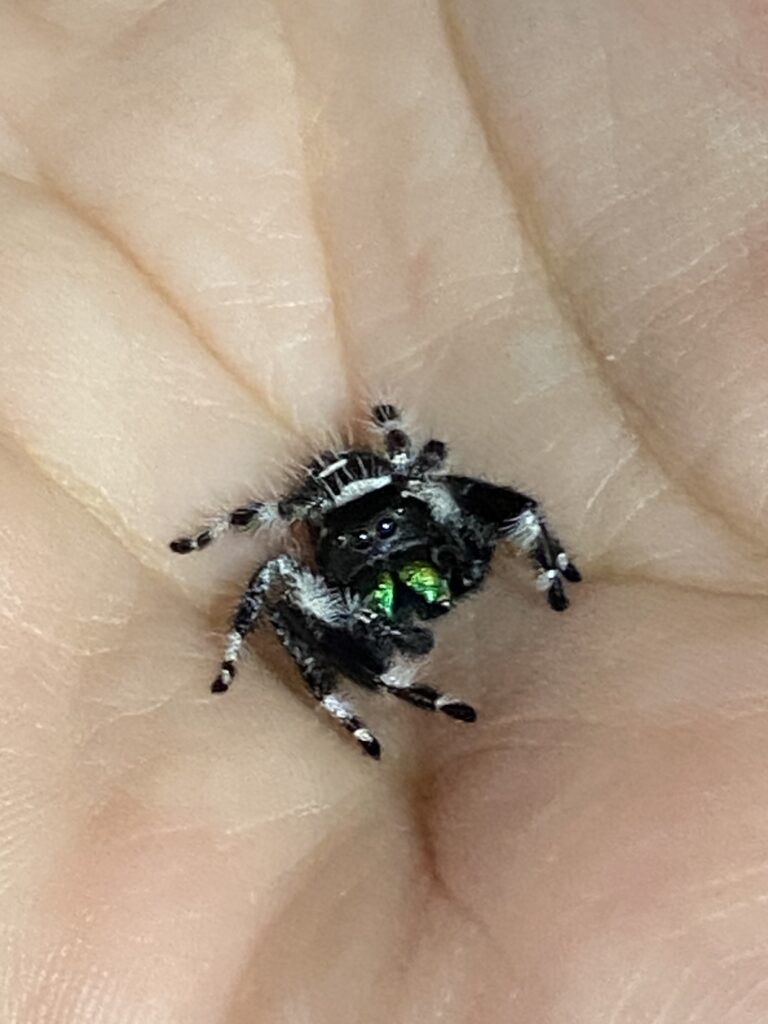
Spike is my male White Bahamas morph of Phidippus regius.
He’s bright white with bold black markings and is by far my most confident and active spider. He loves high platforms and will often stop to watch me through the enclosure.
Molly — Florida Apalachicola Phidippus regius
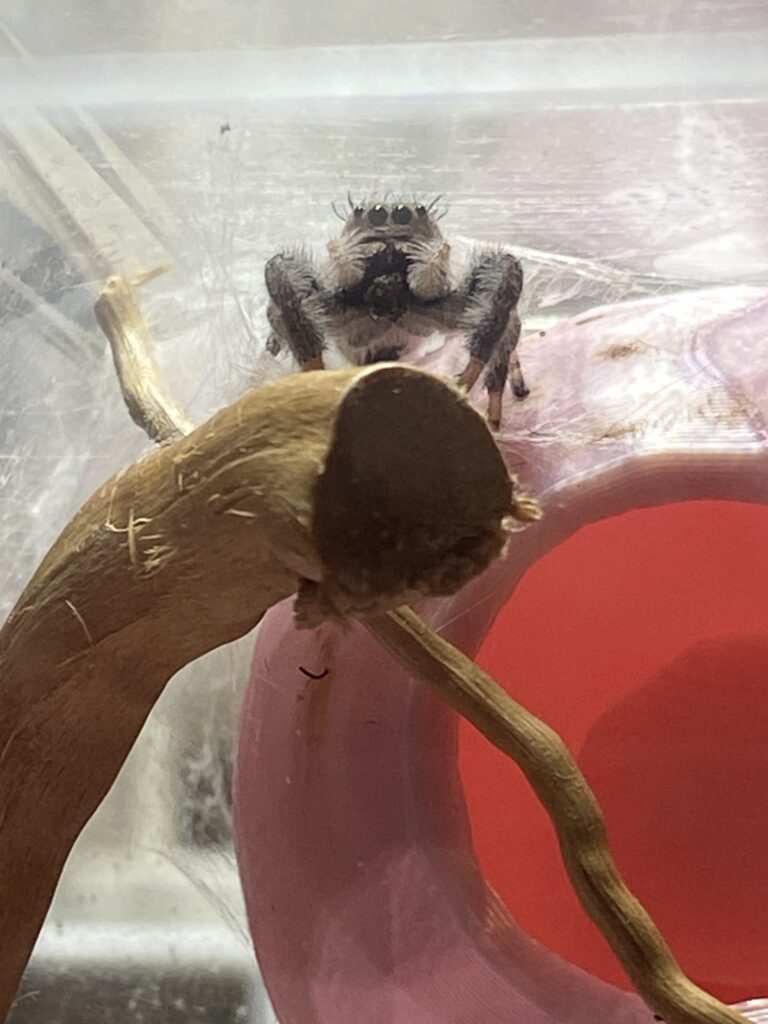
Molly is my female Phidippus regius from the Florida Apalachicola locale.
She’s more earth-toned and camouflaged, prefers shaded cork hides, and has a calmer, more deliberate personality.
➡️ Important:
Spike and Molly are the same species (Phidippus regius).
“White Bahamas” and “Florida Apalachicola” describe morphs/locales, not different species.
Taco — Phidippus johnsoni
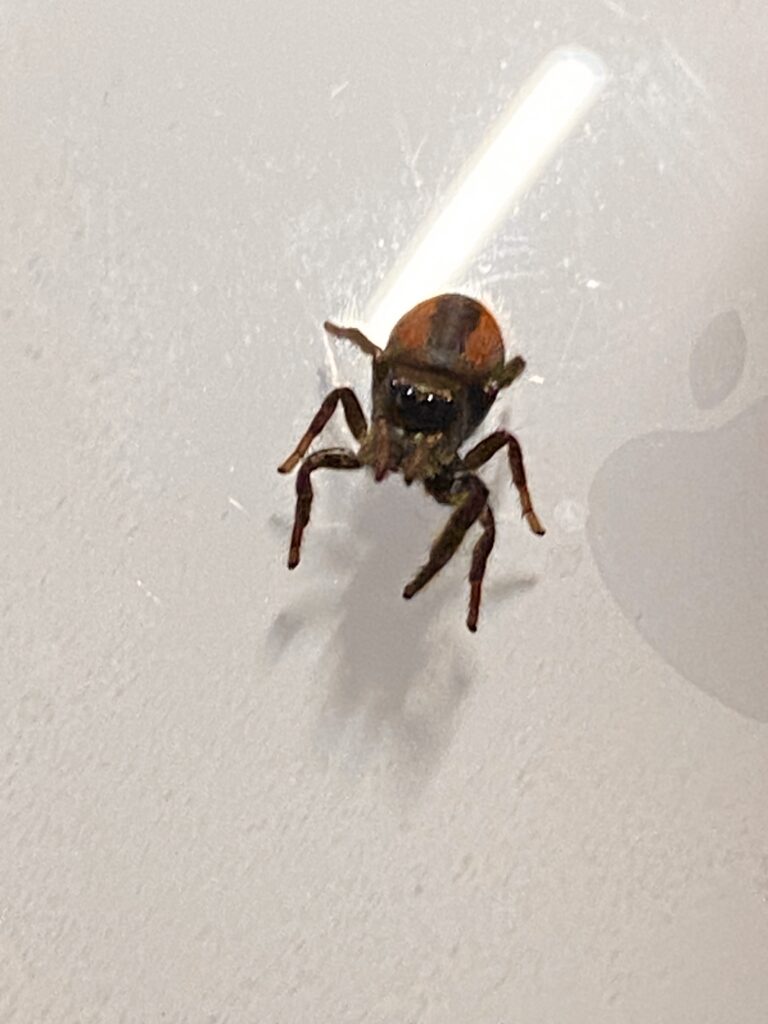
Taco is my female Phidippus johnsoni, a completely different species known for its red abdomen. She’s more reserved than my regius spiders and loves vertical climbing and building hammocks near the top of her enclosure.
In this right moment, she’s busy making her hammock wider and probably thicker, so she’s going to molt soon, as she’s very young. I got her with 7 paws because of a mismolt, but she already molted once with me, and she grew it back.
Simple Habitat Setup That Actually Works
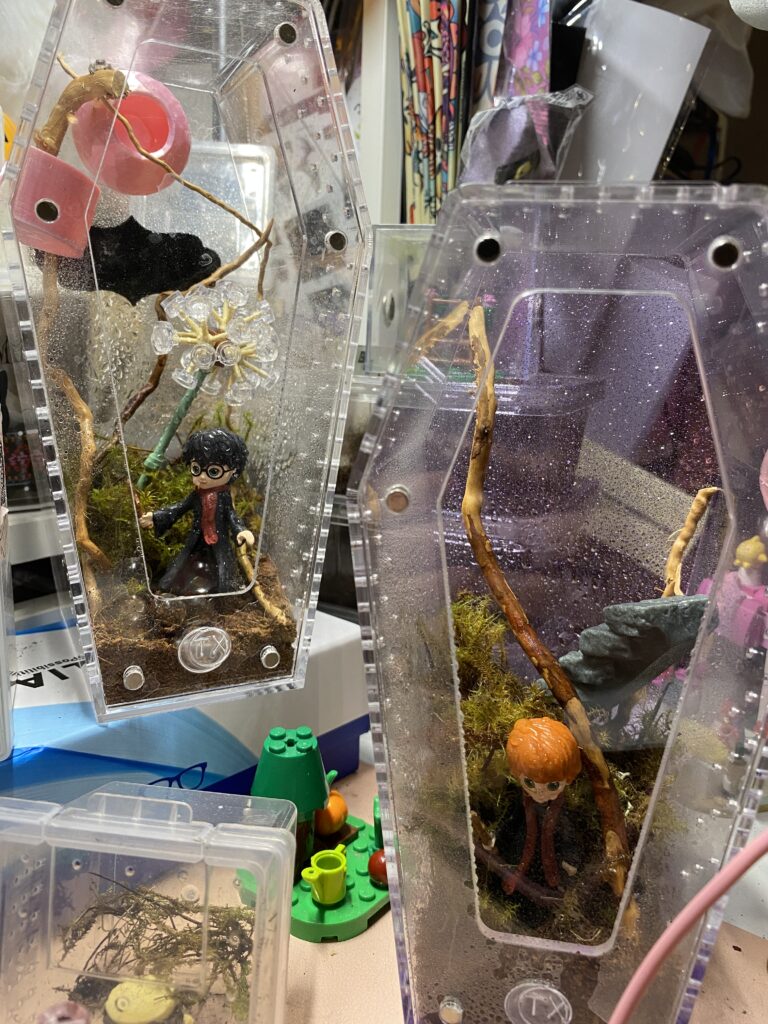
Spoiler: she built her hammock BEHIND the house.
Jumping spiders don’t need anything fancy, but they do need the right setup.
What matters most:
- Vertical enclosure (minimum 4×4×8 inches)
- Front-opening design (avoid top opening)
- Cork bark, twigs, ledges, and plants for climbing
- Good ventilation: it has to be cross-ventilation
Spike prefers elevated platforms, while Molly clearly thrives with layered cork hides that mimic tree bark.
If you’re looking for supplies, I keep a list of items I personally recommend here:
👉 https://amzn.to/4qNCqGD
(This is my Amazon referral link. Using it supports my blog at no extra cost to you! Thank you if you do!)
Temperature, Humidity & Feeding (Realistic Routine)
- Temperature: 70–80°F
- Humidity: 50–70%
- Misting: 2–3 times per week, more when it’s winter and the heating is on.
Molly does especially well with slightly higher humidity, the same as Spike, while Taco prefers things a bit drier.
Feeding:
- Fruit flies, house or blue bottle flies, small crickets, or roach nymphs
- Adults eat every 3–5 days
Spike eats more often due to his higher activity level. Molly tends to hunt everything together and goes around with her mouth full of fruit flies. Taco is more pensative.
Handling & Behavior (What I Recommend)
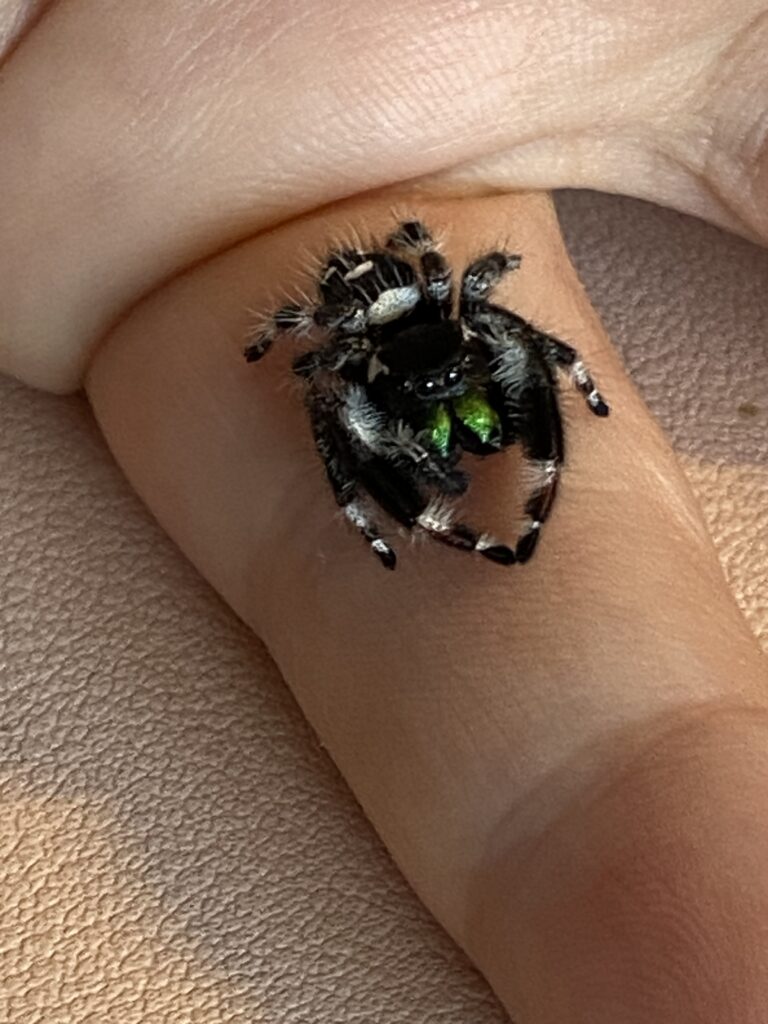
I don’t force handling. Ever. Spike comes out on his own from his enclosure to hang out with me.
If interaction happens, it’s because the spider chooses it. Slow movements, patience, and respect go a long way. Spike is the most curious. Taco prefers observation. Molly is somewhere in between.
Spike is used to take naps on my hand while I’m working, and he’s very sweet.
Costs: What to Expect
Jumping spiders are one of the most affordable exotic pets.
| Item | Typical Cost |
|---|---|
| Spider | $20–$70 |
| Enclosure | $15–$40 |
| Decor | $10–$30 |
| Monthly food | $5–$10, even less if you manage to keep the bugs alive. |
Quick FAQs (Subscriber Favorites)
Are jumping spiders safe pets?
Yes. They’re harmless to humans. I never got bitten in years.
Can they live together?
No, they are strictly solitary. Habitat close to another one? Yes. Two spiders in the same habitat? NO.
Do different morphs need different care?
No. Same species, same care. They do have different tastes in food, though.
Are they good beginner pets?
Absolutely.
Final Thoughts
Keeping jumping spiders as pets has genuinely changed my perception of spiders. Spike, Molly, and Taco are all very different, yet each one is fascinating in its own way.
If you’re thinking about getting one, I hope this post helps you feel informed and confident…and maybe even a little excited.
Thanks for reading,
— Barbara 🕷️